Land vs. Stocks vs. SACCOs: Where Should Kenyans Invest Their Money in 2026?
The Question Every Kenyan Investor Eventually Asks
You have worked hard, saved consistently, and arrived at the point where you have a meaningful amount of capital to deploy. Maybe it is KES 500,000. Maybe it is KES 2 million. Maybe it is the equivalent in diaspore remittances arriving in monthly instalments. The question you are now sitting with is the same one that every thoughtful Kenyan investor eventually confronts: what do I do with this money to make it work harder than it would sitting in a savings account?
Three asset classes come up in this conversation more than any others: land, stocks, and SACCOs. Each has passionate advocates. Each has genuine advantages. And each comes with trade-offs that are frequently glossed over in the promotional material. This article is an attempt to lay all three out honestly, so you can make a decision that fits your actual financial situation, risk tolerance, and time horizon, rather than the hypothetical investor that every asset manager secretly wishes you were.
Stocks and Equities: High Potential, High Variability
The Nairobi Securities Exchange (NSE) offers Kenyan investors access to shares in publicly listed companies across banking, manufacturing, telecommunications, insurance, and agriculture. The theoretical appeal is compelling: professional management, instant liquidity, dividend income, and the potential for capital appreciation that outpaces inflation over long time horizons.
The practical experience, for many retail investors, has been more complicated. The NSE 20 Share Index, Kenya's blue-chip benchmark, has delivered uneven performance over the past decade, with significant dips during periods of political uncertainty (the 2017 and 2022 election cycles), the COVID-19 disruption in 2020, and global interest rate headwinds in 2022 to 2023. Some individual stocks have delivered excellent returns. Others have destroyed capital. Picking the right ones requires either considerable analytical skill or the willingness to pay a fund manager to do it for you.
The honest picture for equity investors in Kenya in 2026:
- Liquidity advantage: You can sell listed shares in minutes, making equities the most liquid of the three asset classes. This matters enormously in an emergency.
- Low entry barrier: You can start with as little as one board lot on the NSE, making stocks accessible to investors who cannot yet afford land.
- Volatility risk: Short-term price swings are significant and largely unpredictable, which makes equities unsuitable as a primary wealth store for investors with a 2 to 3 year horizon.
- Dividend income: Well-selected dividend stocks, particularly in the banking sector, have delivered consistent income streams, though dividend policy can change with economic conditions.
- Currency exposure: For diaspora investors transacting in USD or GBP, the Kenya shilling's depreciation trend over recent years has eroded the Kenya-shilling returns of equity portfolios when translated back to the investor's home currency.
Verdict: Stocks are an excellent component of a diversified investment portfolio, particularly for investors who can afford to be patient, can handle volatility, and have the discipline not to sell at every dip. They are not a reliable substitute for a hard asset like land in a first-time investor's portfolio.
SACCOs: The Kenyan Middle Class's Workhorse
Savings and Credit Cooperative Organisations, universally known in Kenya as SACCOs, are a genuinely Kenyan financial innovation. There are currently over 22,000 SACCOs registered in Kenya, managing assets exceeding KES 900 billion according to the Sacco Societies Regulatory Authority (SASRA). For millions of civil servants, teachers, farmers, and employed professionals, the workplace SACCO has been the primary wealth-building vehicle, a forced savings mechanism with the added benefit of loan access at preferential rates.
SACCOs work, and they work reliably, for a specific type of investor in a specific situation. Their strengths and limitations are well defined:
- Guaranteed dividend income: Most deposit-taking SACCOs have delivered consistent annual dividends in the 8 to 14 percent range on members' deposits, reliably outperforming fixed deposit accounts at commercial banks.
- Access to credit: The three-times-deposits borrowing model means that disciplined savers can access loan capital at rates well below commercial bank lending rates, typically 12 to 14 percent per annum on reducing balance versus 18 to 26 percent at commercial banks.
- Illiquidity: SACCO deposits are not immediately redeemable. Withdrawal typically requires notice of three to twelve months and, in some SACCOs, approval from a committee. This illiquidity is a structural feature, not a bug, but investors who may need capital urgently should factor this in.
- Counterparty risk: Not all SACCOs are well managed. The collapse of several high-profile SACCOs over the past decade has reminded Kenyan investors that these institutions are only as strong as their governance. Stick to regulated, SASRA-licensed SACCOs with audited accounts.
- Capital appreciation: zero. Your KES 100,000 in a SACCO in 2026 is still KES 100,000 in nominal terms in 2031. The dividend income is real, but there is no capital gain. Inflation erodes the real value of your principal over time unless you are continuously re-investing dividends at compound rates.
Verdict: SACCOs are an excellent savings and credit tool, particularly for investors who want predictable income and loan access. They are not an asset-appreciation vehicle. Your SACCO savings grow arithmetically, not exponentially.
Land: The Appreciation Asset Class
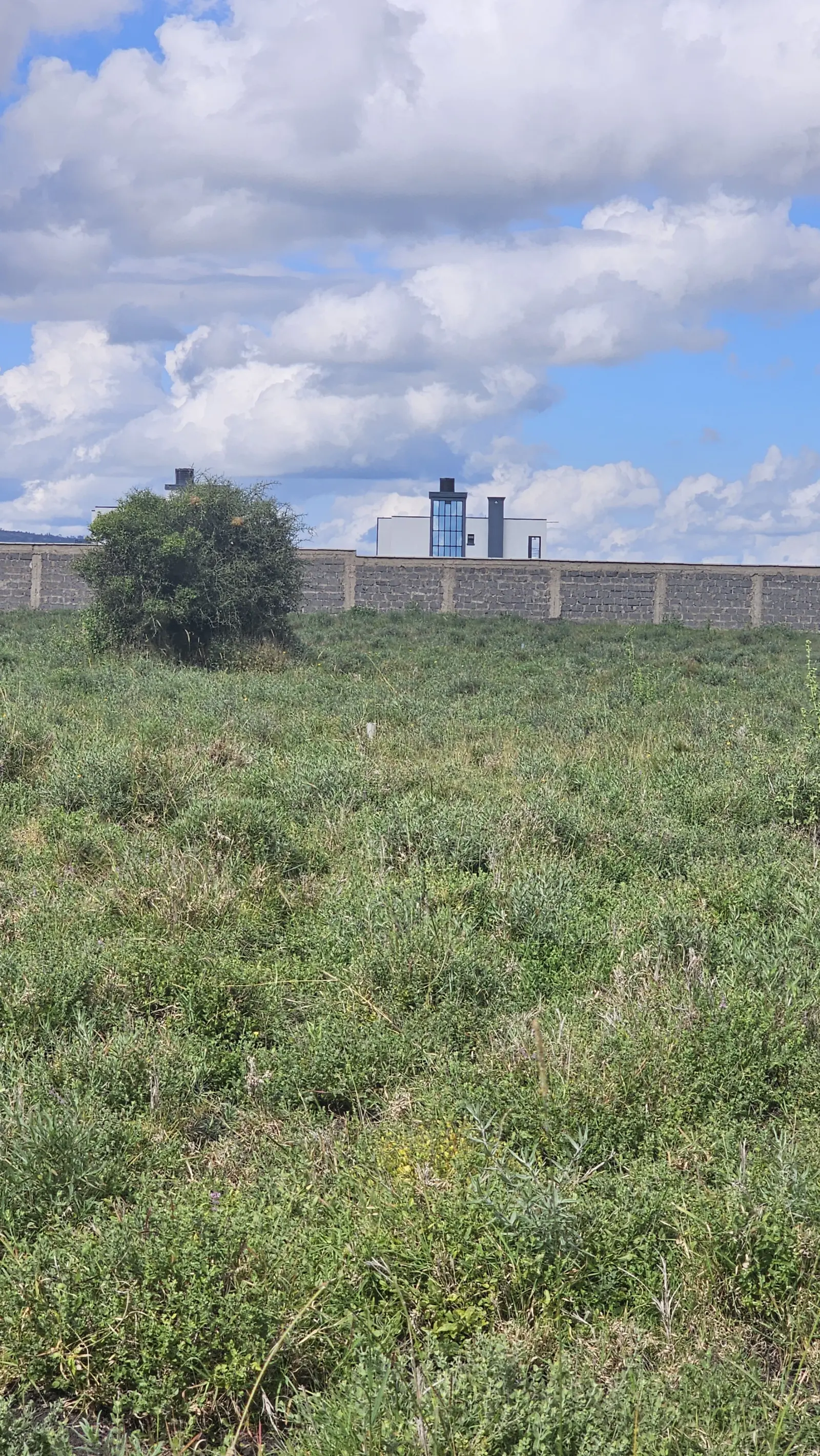
Land in Kenya occupies a fundamentally different position in the investment universe than stocks or SACCOs. It is a finite, immovable, non-replicable asset in a country whose population is projected by the Kenya National Bureau of Statistics to exceed 65 million people by 2035. More people competing for the same fixed supply of land in strategic locations means, over the long run, a structurally rising price floor.
The Kenyan land market's track record on appreciation in high-demand corridors has been compelling. Peri-urban land in areas that became satellite towns over the past fifteen years, think Athi River, Kitengela, Ruiru, Thika, delivered returns that no SACCO dividend and no NSE equity could match in the same period. Investors who bought land in Ruiru in 2005 and sat on it until 2020 did not need to read financial news or attend investment seminars. They just needed patience.
The current version of that story is playing out in the Konza Technopolis development corridor, where government-committed infrastructure investment is creating the same conditions that drove appreciation in those earlier satellite-town corridors. The full case for Konza investment covers the infrastructure pipeline and appreciation trajectory in detail.
Honest accounting of land's trade-offs:
- Illiquidity: Land is the least liquid of the three asset classes. Selling a plot takes weeks to months from the decision to the title transfer. You cannot liquidate land in an emergency the way you can sell shares.
- No periodic income: Unless you are renting or developing, land generates no cash flow. It is a passive store of value that grows over time but does not pay you monthly.
- Entry cost: Quality freehold land in a high-growth corridor typically requires a more meaningful initial commitment than opening a SACCO account or buying shares, though installment plans have substantially lowered this barrier.
- Location dependency: Not all land appreciates equally. Land in a declining rural area with no infrastructure investment can stagnate for decades. Location research is non-negotiable.
- Management overhead near zero: Unlike equities that require market monitoring, or rental properties that require tenant management, raw land requires almost no active management once purchased and beaconed.
Verdict: Land is the primary capital appreciation vehicle for the Kenyan investor with a 5 to 15-year horizon and the discipline to tolerate illiquidity. In a strategically selected location with government infrastructure backing, it is the closest thing to a compounding machine in Kenya's physical asset universe.
How a Sensible Kenyan Investor in 2026 Might Actually Allocate Capital
The honest answer is that the three asset classes are not competitors. They serve different functions and the most resilient financial positions combine all three in a proportion that reflects the investor's stage of life, income stability, and time horizon.
A framework that many of Kenya's most financially secure middle-class families have arrived at through experience, rather than theory, looks something like this:
- Emergency liquidity and credit access: SACCO. Keep 3 to 6 months of living expenses in a strong, SASRA-regulated SACCO where it earns a competitive dividend and gives you borrowing power at low rates when needed.
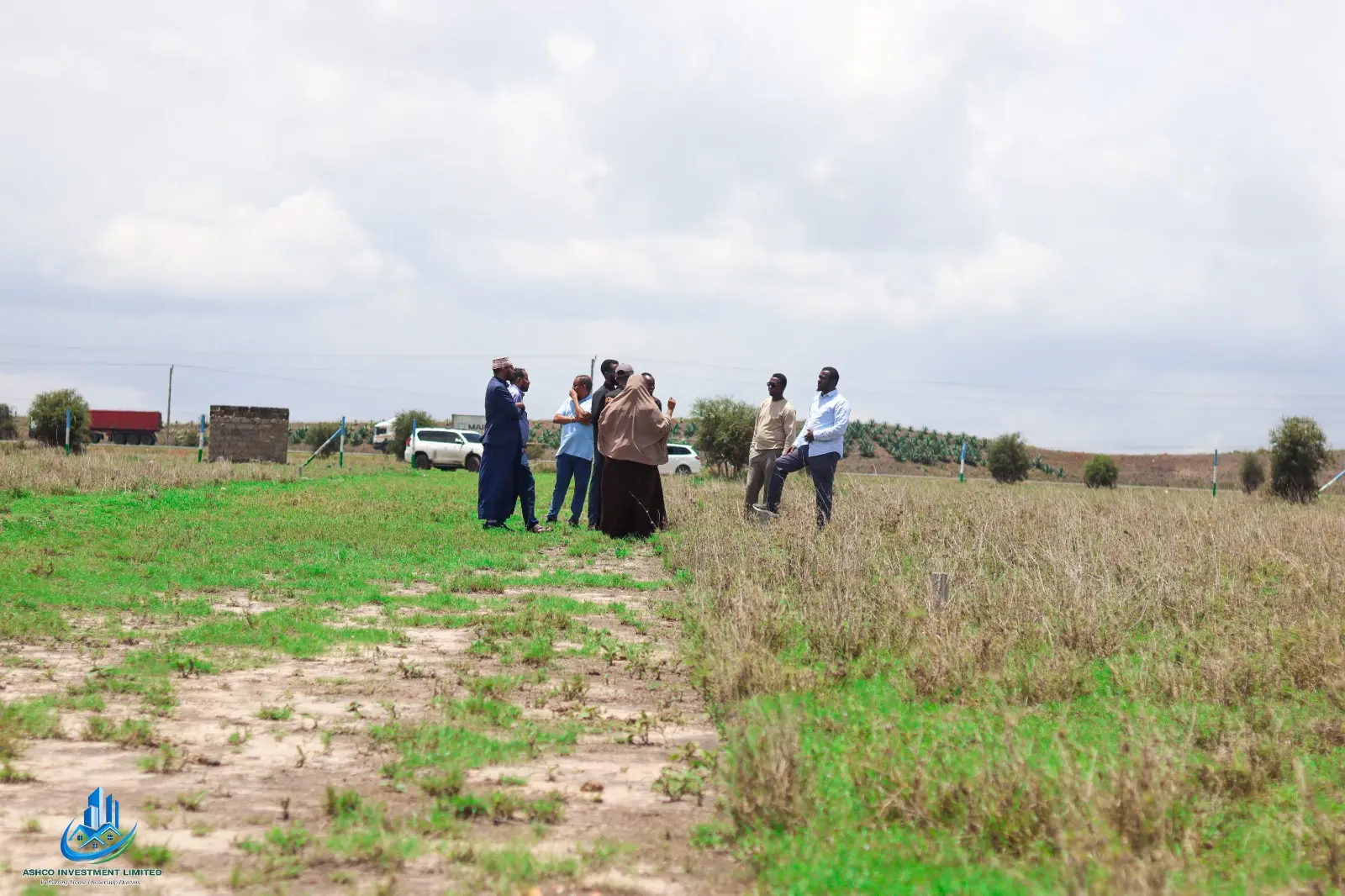
- Long-term wealth creation: Land. One to two well-chosen, titled plots in a high-growth corridor represent a multi-decade appreciation position that requires no active management and builds generational wealth.
- Growth and income diversification: Stocks. A 10 to 20 percent allocation to well-selected NSE-listed equities or a regulated unit trust fund adds liquidity and dividend income while giving the portfolio exposure to corporate earnings growth.
The trap that many investors fall into is over-concentrating in whichever asset class was most recently discussed at a family event or forwarded in a WhatsApp group. Diversification across these three functions, not three identical versions of the same risk, is what builds durable financial security.
The First Step Is the Hardest One
Most Kenyans who have not yet started investing do not lack the capital or the intention. They lack the confidence that they are making the right choice and the right entry point. The good news is that all three of the asset classes discussed here have accessible entry points in 2026. A SACCO account can be opened with KES 5,000. NSE shares can be bought through a licensed stock broker with minimal capital. And land near Konza Technopolis can be reserved with a structured installment plan starting at 30 percent down.
If you want to understand which investment profile fits your specific situation, our free investment survey is a 5-minute tool designed to surface the right questions before you commit. Or if you are ready to explore the land investment option directly, view our available plots and our current pricing. Our team is available for a no-obligation conversation at any time through the contact page.
Building wealth is not about finding the perfect asset class. It is about starting with the right one for where you are, now, and adding others as your capital and confidence grow.
Free Consultation
Interested in a plot near Konza?
Leave your details and our team will call you within 24 hours with available plots and prices. No obligation.