The Kenyan Diaspora's Complete Guide to Buying Property Back Home in 2026

The Pull of Home Is Real, and So Is the Risk
For millions of Kenyans living in the United Kingdom, the United States, Canada, the Gulf, Australia, and across the rest of the world, the desire to own land back home is not just a financial calculation. It is deeply personal. It is about roots, about something tangible to pass to the next generation, about the security of knowing that regardless of what happens in a host country, there is a piece of Kenya that is yours. This combination of emotional and economic motivation makes diaspora Kenyans among the most motivated and most vulnerable buyers in Kenya's property market.
The motivation is entirely understandable. According to the Central Bank of Kenya, diaspora remittances consistently rank among Kenya's top three sources of foreign exchange, exceeding $4 billion annually in recent years. A significant proportion of that capital is channelled into land and property purchases. Yet for every diaspora investor who secures a clean, appreciating asset back home, there is another who has been defrauded by an agent they trusted, who has paid for land they cannot locate, or who discovers after years of payments that the title was never registered in their name.
This guide is written for the diaspora investor who wants to do this right, who is willing to spend the time and a modest amount on proper due diligence rather than risk losing a lifetime of savings to a land deal that falls apart 10,000 kilometres from home.
Why Diaspora Buyers Face Unique Risks
The core challenge for diaspora investors is distance. You cannot walk to the plot on a Tuesday afternoon to confirm it exists. You cannot drive to the land registry to run a search. You cannot turn up unannounced at an agent's office if something feels wrong. This distance creates information asymmetry that unscrupulous sellers exploit with remarkable sophistication.
Common schemes targeting diaspora buyers include:
- Fictitious or duplicated plots where the same parcel is sold to multiple overseas buyers simultaneously, relying on the fact that none of them will visit the physical location before paying
- Forged title deeds sent as PDF scans, designed to look legitimate on a screen but flagged immediately as fraudulent by any Kenyan land registry official
- Long-distance installment schemes where monthly payments are collected for years and then the "company" disappears before title transfer is initiated
- Proxy purchases where a trusted family member or friend is authorised to sign on the investor's behalf, but uses the power of attorney for a different transaction than agreed
None of these risks mean you should not buy. They mean you should buy through a structured, documented, verifiable process, one that does not depend on trust alone.
Step 1: Establish Your Investment Objective Before You Search
Diaspora investors often jump to property searches before they have defined what they actually want the investment to do. Are you buying to hold long-term and retire on the appreciation? Are you buying to build a rental income property in the next three to five years? Are you buying to secure a plot for a family home on return? Or are you buying primarily as a store of value, a place to park foreign-currency earnings in a hard Kenyan asset?
The answer to this question determines which type of land makes sense for you. A half-acre plot in a rapidly developing smart city corridor like Konza Technopolis is an excellent long-term appreciation play for someone with a 7 to 15-year horizon. A plot in a mature Nairobi satellite town may be better suited for someone planning to build within three years. Taking our free investment survey is a good place to start if you are not yet sure which profile fits you.
Step 2: Vet Your Intermediary More Carefully Than the Property Itself
In Kenya's diaspora property market, the intermediary is the single biggest risk factor. Before you evaluate any specific plot, evaluate the company or agent you are being asked to trust with your money. A legitimate property company in Kenya will have:
- A verifiable Certificate of Incorporation from the Business Registration Service, searchable online
- A physical address in Kenya that you can verify, not just a Nairobi P.O. box and a WhatsApp number
- A demonstrable track record of completed title transfers to clients in their names, ideally with references you can independently contact
- Willingness to conduct a video-verified site visit where a staff member walks the land live while you watch, showing GPS coordinates, neighbouring landmarks, and beacons
- A clear, written conveyancing process that involves licensed advocates and ends with a registered title deed in your name
Ashco Investment Limited is a registered Kenyan company with a verifiable corporate history, a physical office, and a completed-transaction track record across Kenyan and diaspora clients alike. Our about page provides full company background and team details.
Step 3: Use a Power of Attorney the Right Way
Because most diaspora buyers cannot travel to Kenya for every stage of the transaction, a Special Power of Attorney (SPOA) is commonly used to authorise a representative in Kenya to sign documents on the buyer's behalf. Used correctly, this is a practical and legally sound tool. Used carelessly, it is a mechanism through which fraud can be committed against you.
A safe SPOA for a land transaction should be:
- Specific, not general. It should name the exact property, the seller, and the actions authorised, rather than granting broad powers over all your affairs.
- Notarised in your country of residence and then either apostilled (for Hague Convention countries) or legalised through the Kenyan High Commission in that country.
- Limited in duration, with an expiry date that covers the expected transaction timeline and no more.
- Held by your own independent advocate, not the seller's lawyer, and used only in accordance with instructions you have given in writing.
Your Kenyan conveyancing advocate should guide you through the proper SPOA preparation. The Law Society of Kenya maintains a public register of advocates if you need to find independent legal representation.
Step 4: Understand the Tax Implications of Buying as a Non-Resident
Kenyan citizens are taxable residents regardless of where they live, and the Kenya Revenue Authority (KRA) takes an active interest in land transactions. When you purchase land in Kenya, the following taxes are relevant:
- Stamp Duty: Payable on the transfer deed, currently 4% of the property value for urban areas and 2% for rural areas. This is a buyer's cost and must be paid before the transfer is registered.
- Capital Gains Tax (CGT): At 15% of the net gain when you eventually sell the property. Proper documentation of your original purchase price, improvement costs, and legal fees reduces the taxable gain.
- Rental Income Tax: If you develop and rent the property, rental income earned in Kenya is subject to Kenyan income tax.
Tax compliance is not something to defer. Unregistered transfers and undeclared property gains create legal complications that can prevent you from selling or mortgaging the asset in the future. Build the tax costs into your acquisition budget from the start.
Step 5: Demand a Documented Title Transfer Timeline
One of the most common diaspora investor complaints is not outright fraud but rather the experience of having paid in full for land and waiting years for a title that never arrives, or arrives registered under someone else's name due to administrative errors. A legitimate property company will provide you with a written timeline for the title transfer process and honour it.
In a standard transaction managed by Ashco Investment Limited, once full payment has been received and the sale agreement signed, the title transfer process follows a documented sequence: stamp duty assessment, payment and endorsement, execution of the transfer deed, submission to the land registry, and issuance of the new title in the buyer's name. We keep clients updated at each stage through our member portal, and the title deed is dispatched to the client or their designated advocate upon registration. Read our guide on how the full purchase process works for a detailed walkthrough.
Why Konza Is the Right Choice for Many Diaspora Investors Right Now
The Konza Technopolis corridor offers diaspora investors a combination of attributes that is difficult to find elsewhere in Kenya's market: government-backed infrastructure investment, freehold titles, a verifiable appreciation trajectory, and an active, reputable agent community. Prices today remain below what they will be in five years once anchor infrastructure is fully operational. The investors who will benefit most are those who move before the tipping point, not after.
We currently have diaspora clients in the UK, USA, Canada, UAE, and Qatar who hold plots in the Konza corridor through our installment programme. Many have never visited the land in person. They do not need to, because the verification, the legal framework, and the ongoing relationship are structured to give them confidence from wherever they are. See current available plots near Konza Technopolis and compare pricing across our project phases.
Your First Step: Book a Virtual Consultation
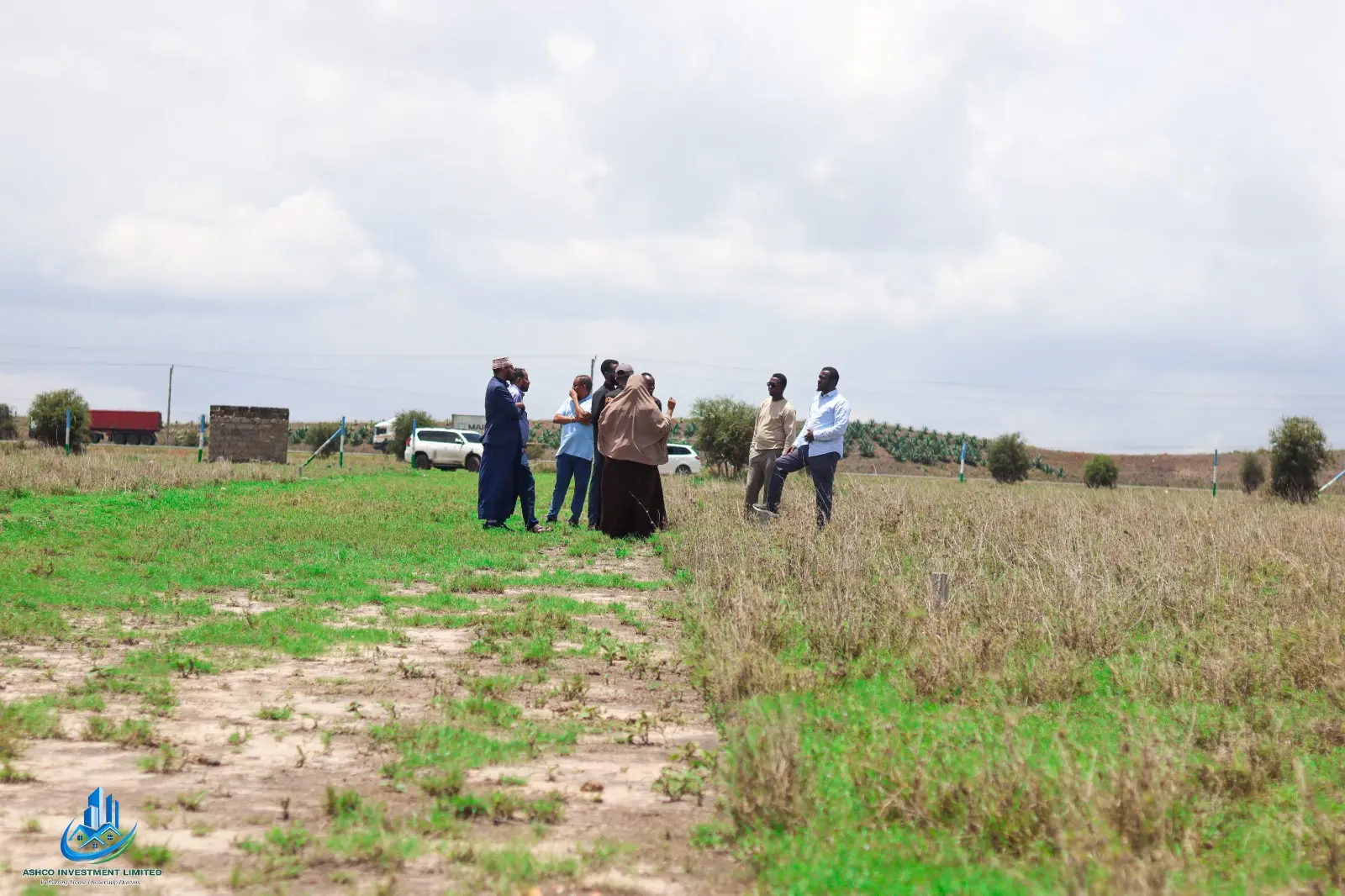
Distance is no longer the barrier it once was. Our team conducts virtual consultations with diaspora investors every week, walking through available plots, title deed documentation, payment structures, and the full legal process via video call. We also offer physical site visits for clients who are in Kenya or planning a visit.
If you are a Kenyan in the diaspora who is ready to stop thinking about buying land at home and start actually doing it safely, reach out to our team today. We will send you a company profile, title deed samples, and a step-by-step transaction guide at no cost and with no obligation.
Free Consultation
Interested in a plot near Konza?
Leave your details and our team will call you within 24 hours with available plots and prices. No obligation.